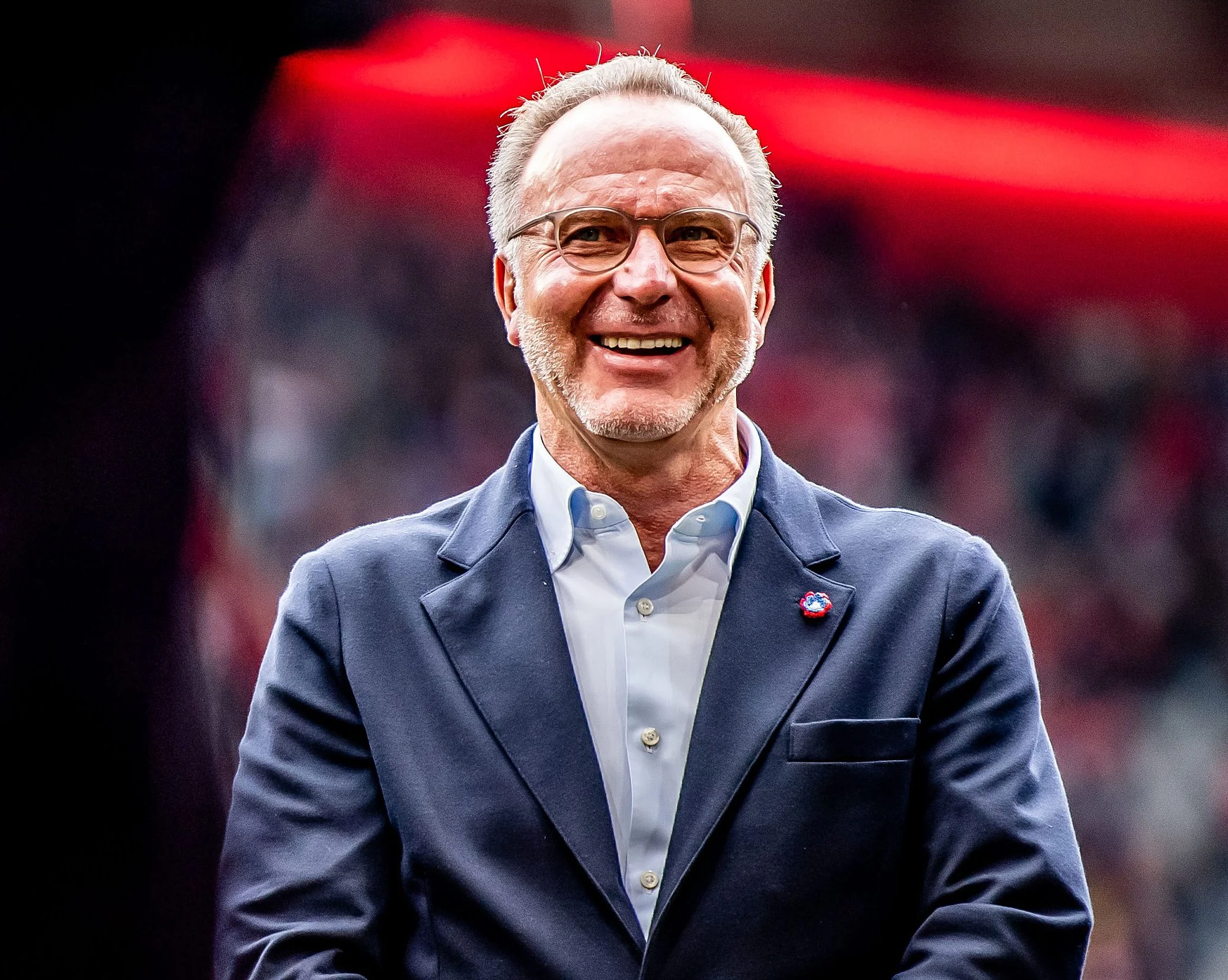
Karl-Heinz Rummenigge has heaped praise on Bayern Munich forward Harry Kane, as well as coach Vincent Kompany and goalkeeper Manuel Neuer. © Thomas Eisenhuth/Bundesliga
Why Kane's Ballon d'Or landed so well in the Bundesliga
The Bundesliga opened with a simple premise. Plenty of people in German football were pleased when [Harry Kane won the Ballon d'Or](https://www.bundesliga.com/en/bundesliga/news/harry-kane-wins-2026-ballon-dor-bayern-munich-england-world-cup-39730) in London, so what makes him the best player in the world right now? Rummenigge's answer is the complete package, on the pitch and off it. Everyone already knows the on-field numbers: goals, plenty of assists, and now a new dimension to his game. The off-field part, he argues, is what gets underrated.More than a goalscorer
The tactical detail is the more interesting part. Kane has started dropping into midfield, from where he plays long passes to Bayern's wide attackers, including [Michael Olise](https://www.bundesliga.com/en/player/michael-olise) and [Luis Díaz](https://www.bundesliga.com/en/player/luis-diaz), or whichever teammate is in space. That change does two things. It stretches the opposition and speeds up the game. And it doesn't cost him his finishing: he still gets back into the penalty area in time to convert chances or score himself. Strikers who drop deep often lose their edge in the box. Kane seems to be keeping both. It's not entirely clear from the interview how much of this role is planned and how much is Kane reading the game in the moment. Rummenigge praises the result, not the blueprint.The person behind the player
This is where Rummenigge gets pointed. Football talks a lot about role models, he says, but fewer players, and fewer sportspeople generally, now fit that description, because many simply don't want to be boxed into an image. Kane, in his view, is an exception. The way he lives, presents himself, speaks and handles interviews is exemplary, and that attitude carries onto the pitch. A striker's job is to score, but Rummenigge points out that Kane occasionally tracks back and makes a tackle near his own penalty area. Here's the thing: that kind of defensive effort from a centre-forward is easy to dismiss as a footnote. For a coach like Vincent Kompany, who needs his whole front line committed off the ball, it's anything but.A contract that was always going to happen
Rummenigge calls the extension "the logical next step," and it's hard to argue with the logic. Kane has been at Bayern for three and a half years, and by Rummenigge's count he has already won plenty. The contrast with his time in England is what sticks. He arrived from a club that rarely collected trophies, and he won nothing there. Here, he's already added silverware, and that record does most of the persuasive work in Rummenigge's case. The personal side mattered too. Kane's Ballon d'Or was a personal high point, his family is settled in Munich, and Bayern are happy with him. The fans are happy too. What was left was the money, and Rummenigge credits Jan Dreesen and his colleagues on the board with closing that gap. Then there's the family dynamic. Rummenigge describes a close relationship with Kane's father and brother, who handle his affairs, and he sees that as a sign of how the deal got done. His broader point is worth more than the contract detail: football is a people business. Whether it's Bayern, Dortmund, or the national team, the players are the ones the media covers and the ones who generate the talking points. Watch: Kane signs Bayern contract extensionFrom target man to something broader
The more interesting question is how Kane changed. He's gone from a traditional centre-forward to a complete attacking player, and Rummenigge's first explanation is simple: he landed in a better team. Playing alongside Michael Olise on the right, Luis Díaz on the left and Jamal Musiala in the No.10 role, Kane suddenly had some of Europe's best attacking talent around him. That alone raises the level. Rummenigge then makes a broader point. Individual brilliance matters, he says, but it doesn't win trophies on its own. He cites Diego Maradona and Lionel Messi, two Argentinians who still needed good team-mates. It's a fair point, and a convenient one for a club executive. Still, it's hard to dispute that Kane's surroundings have changed. He also points to the coach. Rummenigge describes a strong working relationship, a leader who is empathetic but not afraid to be critical, and someone who is, above all, authentic. Those are the qualities he thinks Kane was looking for, and that he believes Kane found at Bayern.Settling in, and a phone call to the Bahamas
Rummenigge admits he doesn't see much of Kane day to day. He did, however, play a part in getting the move over the line. He knew Tottenham chief executive Daniel Levy well, having dealt with him extensively over the years, and so he picked up the phone to Kane. The detail he remembers most is how quickly Kane responded. If he, Rummenigge, recalls correctly, Kane was on holiday in the Bahamas at the time. Rummenigge called, and Kane answered, which is unusual for a player of that stature. When he missed a call, he rang straight back, sometimes within a minute. Rummenigge says that stuck with him, because he's seen enough difficult periods in football to know how often top players don't behave that way.
Harry Kane and his wife Katie have enjoyed life in Munich. - IMAGO