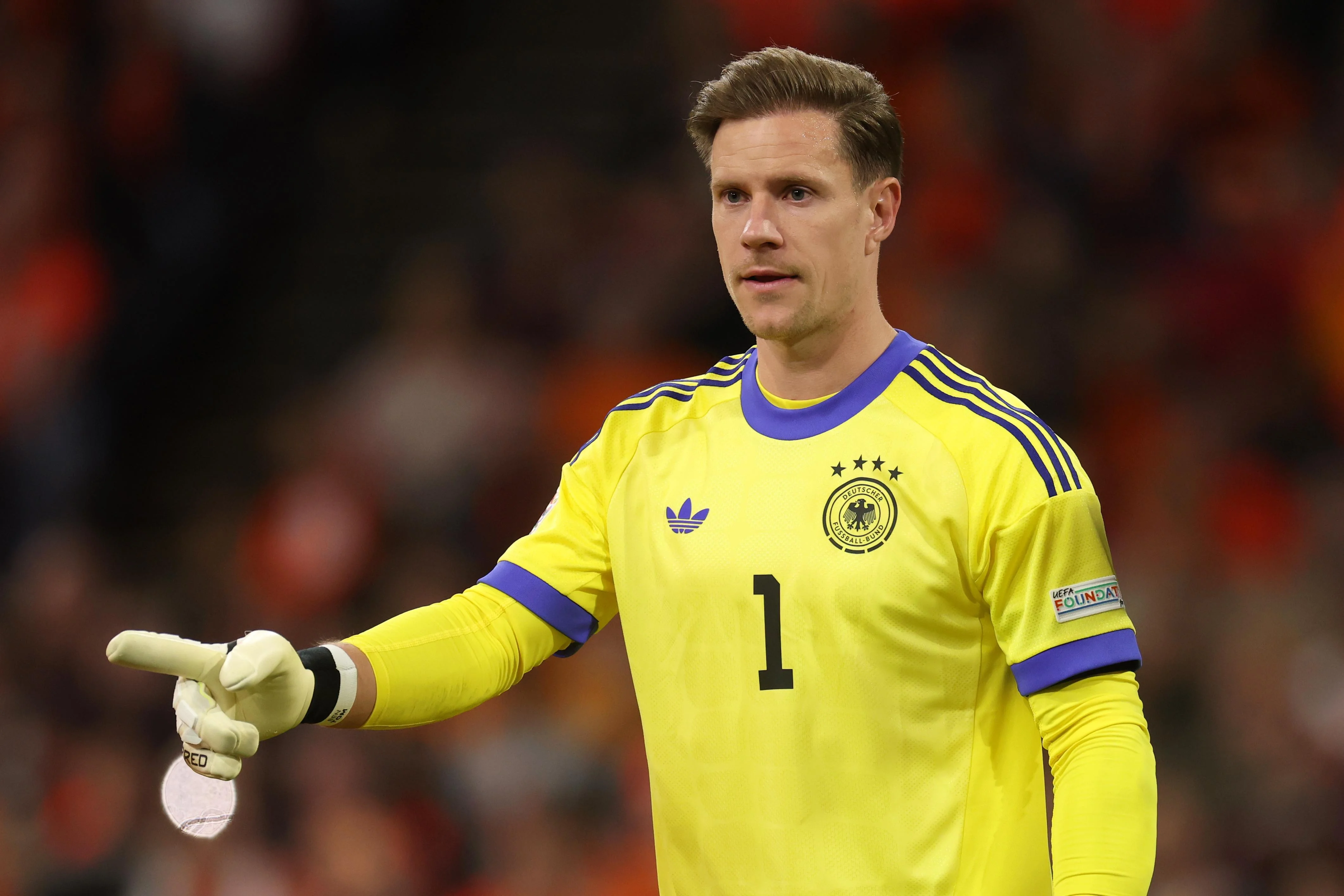
Respect for a rival who set the standard
Marc-André ter Stegen’s place among elite club goalkeepers never settled the question of Germany’s No. 1. For years, Manuel Neuer held the starting role, leaving the Barcelona keeper to balance respect for a towering rival with the frustration of limited international opportunities. The distinction matters: club standing can establish a goalkeeper’s quality, but national-team selection depends on a coach’s judgment, the competition for places, and the weight a player carries within the squad.
Speaking to Sport Bild, Ter Stegen called Neuer one of football’s greatest goalkeepers and said his standing with the national team was well earned. Neuer’s injuries opened the door to uncertainty, but Ter Stegen said competition can sharpen whoever gets the chance to play. That’s a measured account of a rivalry that could easily have been framed as personal grievance. Ter Stegen acknowledges the frustration while making clear that he regards Neuer’s reputation as earned.
“The reality is that Manuel Neuer is not just a great goalkeeper. Let’s not kid ourselves: he is probably one of the greatest goalkeepers of all time. He also enjoyed huge respect within the national team, and rightly so. However, he was also held back by injuries. And who knows better than I do, unfortunately, what that’s like. Nevertheless, I believe that a certain level of competition pushes the goalkeeper who gets to play to improve,” Ter Stegen said, according to @iMiaSanMia.
The quote also points to a familiar tension in elite sport: a team can benefit from having two high-level options, while the reserve still pays a personal cost in lost playing time. Competition may raise standards in training and keep pressure on the starter, but it doesn’t guarantee an equal share of meaningful matches. Here's the thing: from the outside, depth looks like an uncomplicated advantage; for the player waiting, it can mean preparing to perform without knowing when the opportunity will come.
Ambition, patience and the cost of waiting
That respect didn’t erase his own ambition. Ter Stegen said he would have preferred to play, while accepting that Germany’s coaches consistently chose Neuer. He also admitted there were times he kept his frustration private and felt he had earned more opportunities. His account is candid about the gap between accepting a decision and agreeing with it: a player can respect the authority of the coach and still believe the selection was wrong for him.
That distinction is especially visible for goalkeepers, whose place is usually tied to a clear first-choice decision. Outfield players may enter a match from the bench or rotate across roles; a goalkeeper generally waits for the starter to be unavailable or for the coach to make a deliberate change. And then the waiting becomes part of the job. If you're working in this space, Ter Stegen’s comments are a reminder that professional composure doesn’t mean ambition has disappeared.
There’s an understated point here: keeping frustration private may protect a working relationship, but it can also leave the player’s disappointment largely invisible to the public. Ter Stegen says he believed he’d earned more chances, yet his comments don’t turn that belief into an accusation. They show a player describing a difficult balance—maintaining respect for a teammate while continuing to argue, at least internally, for his own place.
The 2018 World Cup decision
The 2018 World Cup remains the sharpest example. Neuer returned after an eight-month injury absence and reclaimed the starting spot without competitive match practice. Ter Stegen described the decision as his most bitter moment, but said revisiting it wouldn’t change the coach’s call. The episode concentrates the larger dispute into one selection: a returning established starter was preferred to the goalkeeper who had been waiting for an opening.
“That was the most bitter moment for me, but I don’t want to revisit it. At the end of the day, the coach makes the decision. You can get as frustrated as you like, but that won’t change anything,” he said.
That response sounds resigned, but it also draws a firm line between feeling aggrieved and having control. A coach chooses the lineup; the player can prepare, make a case, and live with the outcome. Ter Stegen doesn’t say the decision felt fair to him. He says frustration couldn’t reverse it.
What the rivalry says about selection
Ter Stegen’s account captures the particular difficulty of challenging Neuer: the competition was shaped not only by selection decisions, but by the stature Neuer had built inside German football. For Ter Stegen, accepting that reality never meant he stopped wanting the shirt. The numbers here are underwhelming only if the story is reduced to who started more often; the more revealing detail is how he describes the human cost of being ready and still not being selected.
This is more significant than it looks. A strong reserve can give a national team options and raise the level of competition, but the value to the team doesn’t erase the individual’s frustration. And yet, Ter Stegen’s comments don’t ask readers to treat him as a victim or Neuer as an obstacle who lacked merit. They present a narrower, more credible account: admiration, disappointment, and acceptance of a coach’s authority can coexist.
What this means for you as a reader is that the story isn’t simply a contest between two goalkeepers. It’s also a portrait of how status, availability and selection interact in a national team, where past achievements can shape expectations even when injuries complicate the picture (and this is the part most people overlook). Ter Stegen’s experience offers no formula for how such choices should be made. Just the unresolved tension between believing you’re ready and waiting for someone else to make that call.