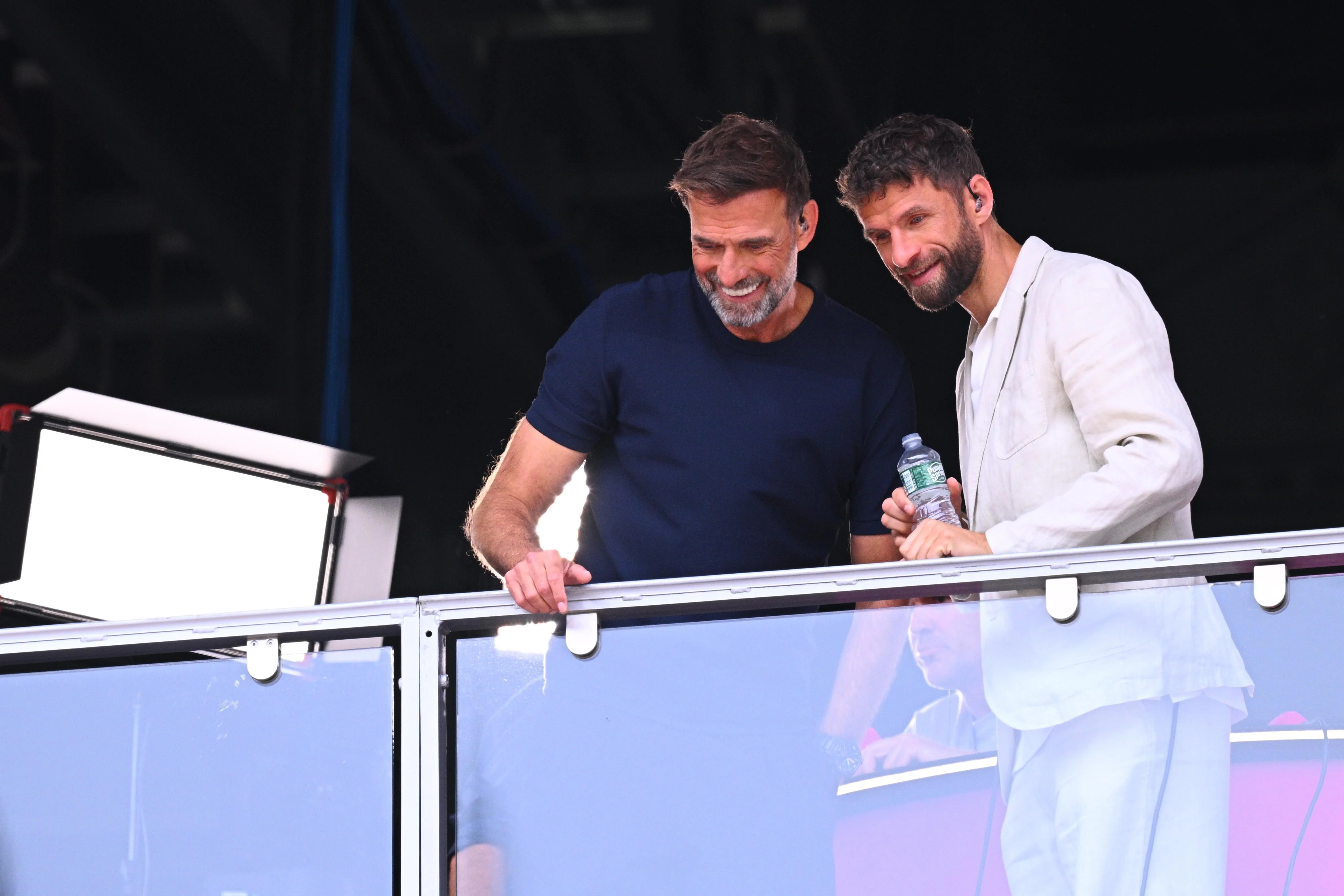
Germany’s problem, in Thomas Müller’s view, goes beyond tactics: the national team needs a clearer identity and the habits to make opponents uncomfortable. He thinks Jürgen Klopp could help provide that direction, but the work would extend well beyond changing the way Germany plays. The distinction matters: a tactical plan can shape a match, while an identity gives players a shared answer to what the team should do when that plan is tested. Müller’s comments frame the job as one of building dependable collective behavior, not simply drawing up a new system.
Klopp’s mix of experience and development
Müller sees Klopp as a coach who can work with established stars while bringing young players through. His Premier League experience, and the project he built at Liverpool without an immediate wave of major spending, add to his appeal for the Germany job. That combination speaks to a challenge national teams face: a coach has limited time with players, so the ability to communicate a clear idea can matter as much as the sophistication of the scheme. Klopp’s club background offers a model Müller believes could translate, though the demands of international football are distinct.
“I think he has a clear idea of which parts of the game he wants to focus on. He’s maybe a good mix between a modern coach and an old-school coach,” Müller said on a recent episode of the Late Run podcast. “He has experience in perhaps the biggest market in football—the Premier League. He has dealt with star players, but he has also brought young players through at his clubs.” The emphasis on both authority and development is telling: a national team coach must earn the trust of senior players while making room for emerging talent. Klopp’s reputation may make that balance easier to imagine, but reputation alone can’t establish whether the fit would work in practice.
That blend could suit a team with good players but a generation coming through that has yet to capture widespread excitement. For Müller, Klopp’s value would lie in making Germany’s direction legible to the players and the public. A recognizable approach can help supporters understand what a team is trying to build, even when results or performances fluctuate. It also gives players a common reference point, reducing the risk that each match becomes a fresh negotiation over priorities.
More edge, less uncertainty
Müller says Germany has drifted toward attractive football without enough ruthlessness when chances matter. The side can look polished, yet lack the decisiveness and resilience that once made it difficult to face. His criticism isn’t that technical quality or attractive play should be discarded; it’s that those qualities need to lead somewhere. A team that controls the ball but hesitates in decisive moments can leave opponents room to recover and turn a promising performance into a frustrating one.
“The whole football world used to look at Germany and say: ‘We want to have that German mentality—to fight through things and be uncomfortable in every moment.’ It seems like we have lost some of that,” he said. “Our playing style can be too beautiful sometimes, but not decisive enough. We’re not cold enough in front of goal. We’re somewhere in between right now.” The phrase “somewhere in between” captures the concern: Germany may have technical ambition without a settled account of how it wants to win difficult games. That uncertainty can show up in more than finishing; it can affect how a side responds when the first plan stalls or the opponent raises the physical and tactical pressure.
His prescription isn’t a collection of individual stars expected to solve matches on their own. Germany needs a dependable team structure and shared behaviors, even if players aren’t close friends off the pitch. That means doing the difficult work consistently and making games uncomfortable for opponents again. In practical terms, the point is about repeatable decisions: supporting a teammate under pressure, staying connected when possession is lost, and continuing to compete when a match becomes scrappy. These are general demands of collective football, not a claim that Müller has identified a particular tactical defect.
“I think Klopp can bring clarity, and clarity is always good because we have good players. But we don’t have players who can simply work everything out by themselves. We need a strong team,” Müller said. His argument puts the responsibility on the structure around the talent. That’s a useful corrective to the familiar temptation to treat a national team’s fortunes as a question of finding the right star or selecting the most celebrated names; without shared roles, individual quality can remain disconnected.
Klopp’s reputation is built on demanding collective football, which makes the fit understandable in Müller’s eyes. The test would be whether Germany can turn that approach into a recognizable identity: organized enough to trust, and tough enough to unsettle opponents. The numbers here are underwhelming as a prescription: “clarity” and “mentality” describe goals, but they don’t explain how a team will reach them. Still, that gap is precisely where coaching would have to matter—in translating broad principles into habits players can repeat under pressure.
What the idea would mean for Germany
This is more significant than it looks. Müller is asking for a standard of performance that can survive changes in personnel and the uneven rhythm of international football, where coaches have less time to build routines than they do at club level. If you’re working in this space, the practical question is whether a coach can make a handful of priorities clear enough for players to carry them into matches with limited preparation. A slogan won’t do that; consistent selection, communication and training would have to give the idea substance.
And yet, appointing a coach with a strong public identity wouldn’t settle the question by itself. Klopp’s club experience is part of Müller’s case, but leading a national team involves different constraints, including short preparation windows and a squad assembled from players with varied club roles. (And this is the part most people overlook.) The coach’s message has to work when there’s little time to reinforce it, and it has to make sense to players who may not share the same weekly routines.
The fragment: A demanding idea, still to be proven. For Germany, the useful measure would be whether the team becomes more decisive and more connected in the moments Müller describes, rather than whether it merely adopts a more forceful image. That’s a demanding test, but it follows directly from his criticism: identity only counts when it changes what players do on the pitch.
Join the conversation!
Sign up for a user account and get:
- New, improved notifications system!
- Fewer ads
- Create community posts
- Comment on articles, community posts
- Rec comments, community posts