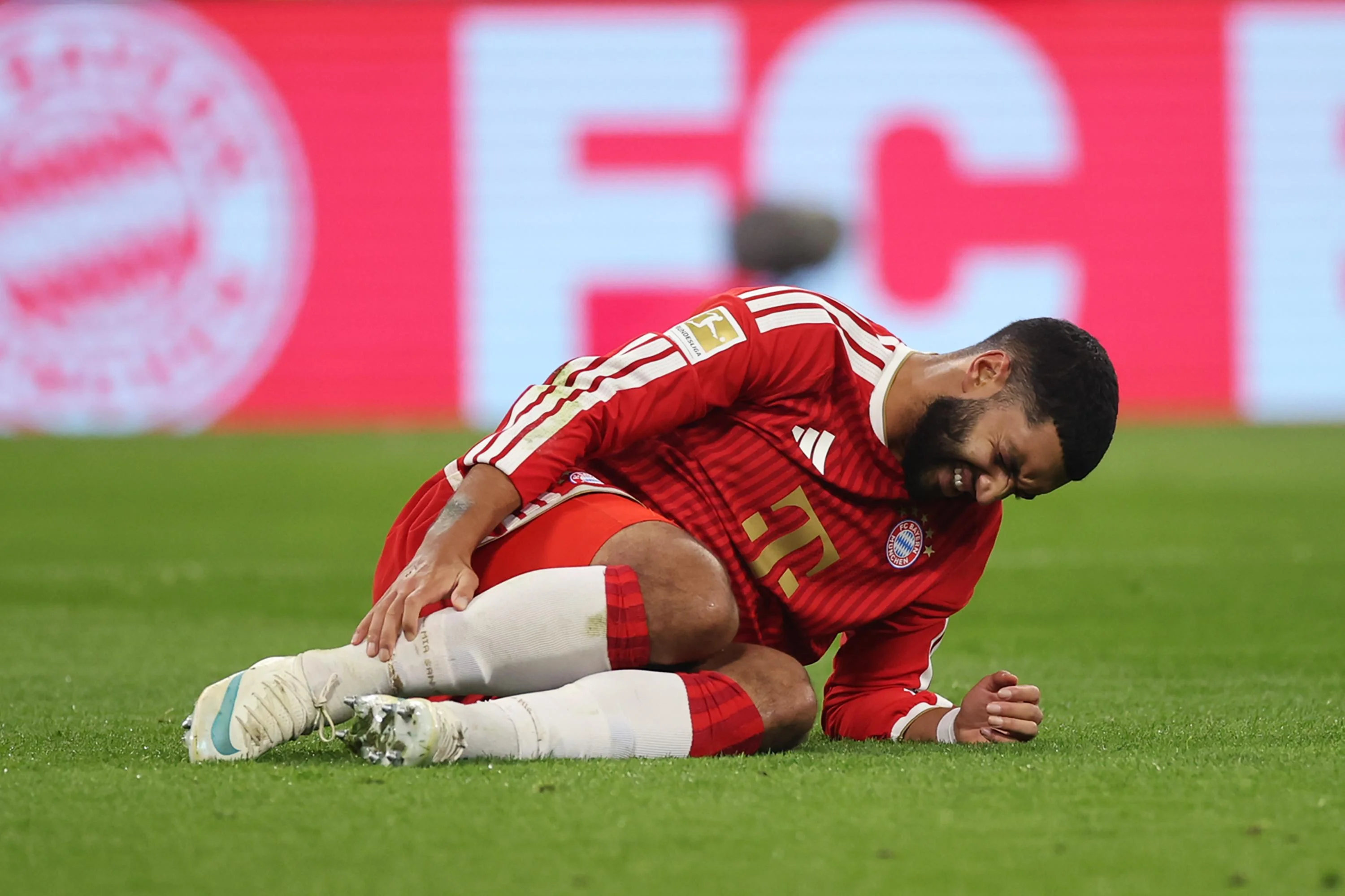
A draw that felt like a missed opportunity
Bayern Munich’s 2-2 draw with Borussia Dortmund was a match of glaring contrasts: Bayern created enough chances to win comfortably, while Dortmund made its limited opportunities count. The cost for Bayern went beyond two dropped points, with injuries to Ismael Saibari, Serge Gnabry and Michael Olise adding to a frustrating night at the Allianz Arena.
The scoreline captures the result, but not the imbalance in how the teams reached it. Bayern spent long stretches pressing for a decisive goal and repeatedly found a way to threaten; Dortmund needed far less attacking volume to stay level. That makes the draw harder for the hosts to accept, though the chances they missed are part of the story too.
Bayern’s pressure met Dortmund’s resilience
Dortmund held firm for much of the opening stretch, but Bayern gradually found ways through its defensive shape. The breakthrough came in the 38th minute after Felix Nmecha’s under-hit pass toward Daniel Svensson, who slipped as Konrad Laimer closed in. Laimer took possession and scored after Gregor Kobel saved his first attempt.
That sequence gave Bayern a reward for its pressure, but it also showed how a single mistake can alter the shape of a tightly contested match. Laimer reacted quickly after the loose pass and stayed involved after Kobel’s save. Dortmund had to defend more often from there, yet it kept the match within reach rather than allowing Bayern’s momentum to settle the contest.
Bayern had chances to extend its lead, but the frame repeatedly kept the ball out. Michael Olise struck the woodwork in the first half. Harry Kane hit the crossbar with a second-half penalty and later struck the upright, while Lennart Karl also clipped the bar late on.
Those near misses weren’t all the same kind of failure: some came down to placement, others to the narrow margins of a ball hitting the frame. But the cumulative effect was unmistakable. Bayern kept arriving in dangerous positions without making the scoreboard reflect its advantage.
The numbers underline how much Bayern left on the pitch: the hosts recorded 4.18 expected goals to Dortmund’s 0.63. That gap points to Bayern’s attacking control, but it doesn’t change the result. Niko Kovač’s side absorbed sustained pressure and came away with a draw despite creating far less.
Expected goals help describe the quality and volume of chances, not whether a team has earned a particular scoreline. Here, though, the difference makes the match’s central frustration plain: Bayern generated enough to win, while Dortmund’s more limited output was enough to take a point. The numbers explain the pattern; they don’t excuse the missed opportunities.
Three injuries changed Bayern’s evening
The match also brought a worrying sequence of setbacks for Bayern. Saibari was injured in the 24th minute after a one-on-one chance against Kobel. The goalkeeper rushed out as Saibari continued after his saved shot, and the collision left the Moroccan international unable to carry on.
Six minutes later, Gnabry pulled up and had to leave the field. Olise then hobbled off late in the match, adding another concern for Bayern as the team chased a winner. The injuries disrupted the hosts’ options at a time when they were already struggling to turn chances into goals.
Three departures across different points in the game forced Bayern to adjust while it was still trying to change the result. That’s a difficult combination: substitutions have to cover immediate gaps, and the attacking plan can lose continuity just as pressure rises. The extent of the injuries isn’t established here, but the timing alone made the night more costly than the score suggests.
Kane’s missed chances loom large
Kane had a rare night of missed opportunities. He failed to convert a penalty, sent another promising chance wide and struck the post. For a forward known for his finishing, the misses were striking; in a match Bayern controlled so thoroughly, they became a central reason the team couldn’t secure all three points.
The penalty was the clearest chance to put Bayern in a stronger position, while the later effort off the upright added to the sense that the match was slipping away in inches. That’s the part most people overlook: a dominant attacking display can still leave a team exposed to the opponent’s efficiency when the decisive moments don’t go its way.
His broader value to Bayern remains clear, but the performance showed how quickly the pressure can build when a team’s most relied-upon scorer can’t deliver the decisive moment. Bayern’s chance creation was sufficient. Its finishing wasn’t.
One off night. Even a dependable scorer can have one, but Bayern’s margin for error shrank because so many other chances also went begging.
Karl’s late cameo leaves a selection question
Karl had impressed in Bayern’s 6-1 DFB-Pokal win over FC Magdeburg, but he wasn’t the coaching staff’s first choice when injuries opened up attacking roles. After Saibari went off, Nathaniel Brown came on. When Gnabry was injured, Bayern brought on Josip Stanišić, with Alphonso Davies moving to the left wing and Brown dropping to left-back.
Those choices show how the staff addressed the immediate shape of the team as each injury arrived. Karl’s eventual opportunity came later, when Olise had to leave, rather than as the first response to either earlier substitution. It’s evidence of the decisions made in this match, though one appearance alone can’t establish how much trust the staff will place in him next.
Karl eventually replaced Olise in the 84th minute and nearly made an immediate impact, hitting the crossbar. That late effort showed what he could offer, but his earlier omissions suggest the staff remains cautious about giving him a larger role. Bayern’s next challenge is clear: turn its attacking volume into goals while managing the damage from a costly run of injuries.
What the result leaves unresolved
This is more significant than it looks: a high chance total can disguise how little control a team has over the outcome once finishing fails. Bayern’s performance offered evidence of attacking threat, but the draw also exposed the limits of judging a night by pressure and statistics alone. If you’re working in this space, the distinction matters: creating chances is a repeatable strength; converting them is what turns that strength into points.
Bayern now has two immediate questions. It must find a more reliable end product from the opportunities it creates, and it must account for the three players who left injured. The match provides no answer about the severity of those setbacks, or how long the players may be unavailable. And yet, the draw has already made the practical issue clear: Bayern’s attacking depth and finishing will both be tested if the absences persist.