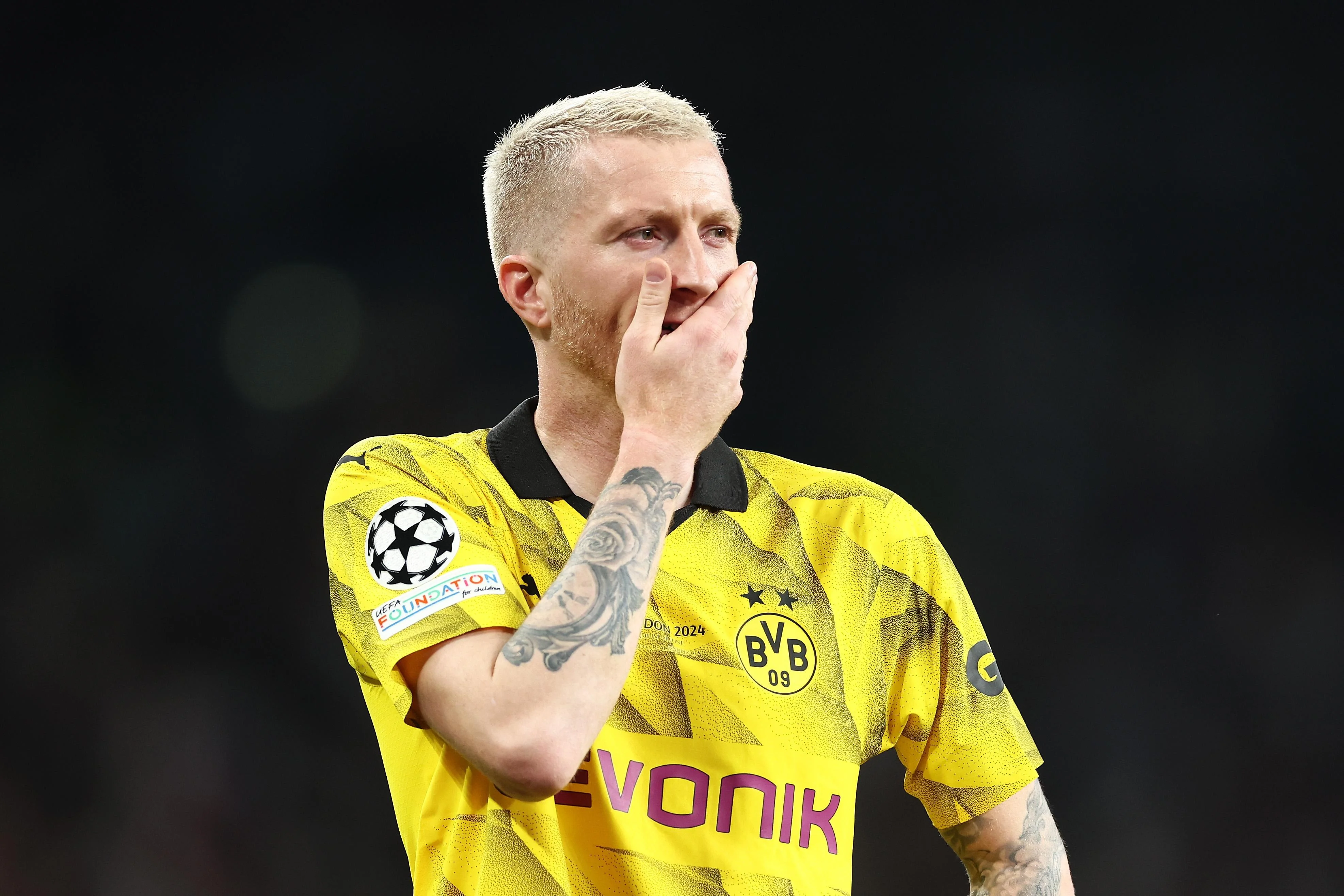
A Dortmund player doesn’t have to be the best on the pitch to become a Bayern fan’s most memorable rival. Sometimes one goal, a provocative celebration or a habit of disrupting Bayern’s afternoon is enough to turn a player into a lasting irritant. With another Klassiker approaching, supporters have plenty of old grudges to revisit—and the list says as much about the people watching as it does about the players who made it.
Rivalries collect memories unevenly. A decisive moment can outlast an entire season, while a player’s manner or repeated clashes with Bayern can color how supporters remember him long after the match itself. That’s why this question isn’t easily settled by statistics or a ranking of individual ability. The most memorable nemesis may simply be the one who made a particular Saturday feel unbearable.
Decades of Dortmund candidates
The choice depends on when a fan began watching. Michael Zorc and Andreas Möller are candidates from the 1980s, an era that gives older supporters a different set of reference points from those who came to the rivalry later. The 1990s brought Matthias Sammer, Stefan Reuter and Jürgen Kohler. Each name can stand for a different memory of Dortmund’s challenge, even when fans disagree about which player was most aggravating.
That generational divide matters. Supporters tend to remember the rivalries they experienced directly: the players they saw repeatedly, the matches they watched with friends, and the moments they still bring up when the teams meet again. A younger fan might find a name from the 1980s more historical than personal. For someone who watched that period, it may be the first answer that comes to mind.
Jens Lehmann and Sebastian Kehl featured as Dortmund rebuilt its rivalry with Bayern in the 2000s. Their place on the list reflects how a player can become identified with a broader competitive period, not just a single incident. In a rivalry, persistence counts. A familiar opponent who keeps appearing in high-pressure matches can become a bigger presence in memory than a more talented player who only briefly crossed a supporter’s path.
Marco Reus came to define the 2010s for many fans. More recent contenders include Jude Bellingham, Erling Haaland, Karim Adeyemi and Nico Schlotterbeck. Their reasons for earning a place on the list vary: some irritated Bayern supporters with their behavior, while others did their damage through performances on the pitch. The names span very different eras and careers, but the thread connecting them is the reaction they provoked from the opposing stands.
What makes a player a nemesis?
This isn’t a vote for Dortmund’s worst player. The most aggravating opponent might be the one who celebrated a little too enthusiastically, talked before a match or seemed to take particular pleasure in spoiling a Saturday. A player can be respected for his ability and still be the person a fan most wants to see lose. In fact, those feelings often go together: opponents tend to become memorable when they have the talent to hurt your team and the confidence to make sure you notice.
There’s also a difference between a villain and a nemesis. A villain can be defined by one controversial impression; a nemesis usually feels recurring, someone who appears in the story every time the rivalry heats up. That distinction is personal, though. One supporter may remember a goal, another a celebration, and a third the frustration of seeing the same player disrupt Bayern’s rhythm again and again.
And this is the part most people overlook: an opponent’s reputation can be built as much by the audience’s reaction as by his actions. Rivalry gives ordinary gestures extra weight. A player’s confidence can look like arrogance to the opposing fan, while a celebration that seems routine to one crowd may feel like a deliberate provocation to another. The memory sticks because it carries the emotion of the match with it.
The next chapter belongs to the fans
So, Bayern fans: which Dortmund player made you shout at the television or dread seeing the team sheet? Name your pick and explain the grievance. The best answers may be less about a complete career summary than one vivid moment: the goal that changed the mood, the behavior that got under your skin, or the performance that seemed to come at Bayern’s expense.
If you're working in this space, you know a rivalry’s history isn’t kept only in trophy counts. It also lives in the small, emotionally charged memories supporters carry from one meeting to the next. Those Klassiker memories are part of the rivalry, and the next meeting may give fans a fresh reason to add to the list. Perhaps a new name will emerge; perhaps the old grievance will prove stubbornly difficult to displace. Either way, the argument is part of the appeal.
The numbers here are underwhelming as a way to settle the question, because there’s no neutral measure for who was most irritating. That’s precisely why the conversation works. Every fan has a different shortlist, and every generation has its own Dortmund player who seemed to make Bayern’s day harder than it needed to be. One goal. One celebration. A whole season remembered through a single opponent.
Join the conversation!
Sign up for a user account and get:
- New, improved notifications system!
- Fewer ads
- Create community posts
- Comment on articles, community posts
- Rec comments, community posts