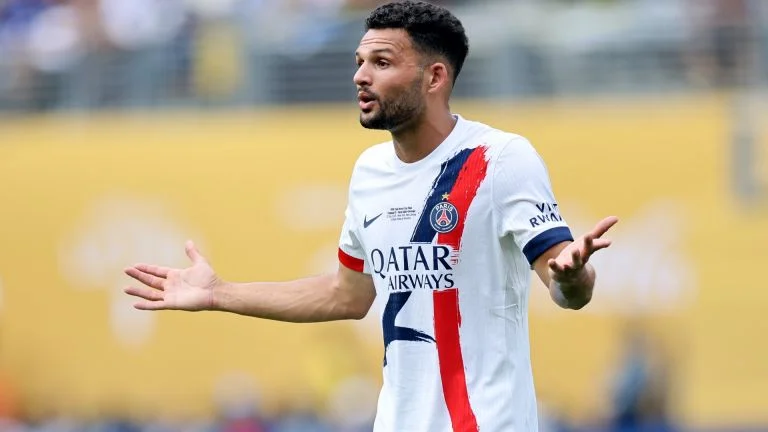
Gonçalo Ramos says his limited run of starts at PSG made it hard to stay, despite a close-knit squad and three successful years at the club. Now at AC Milan, the striker has explained why he chose to leave this summer.
His explanation is less about a breakdown in relationships than about the demands of being a forward at a major club. A player can enjoy strong friendships, contribute goals and still decide that his place in the team isn't secure enough. For Ramos, that uncertainty appears to have become the defining issue.
That distinction matters. Transfers are often presented as a reaction to dressing-room tension, poor form or a dispute with a coach. Ramos's account suggests something quieter and more practical: he didn't want to spend another season waiting for a dependable run in the starting lineup.
Scoring without a starting role
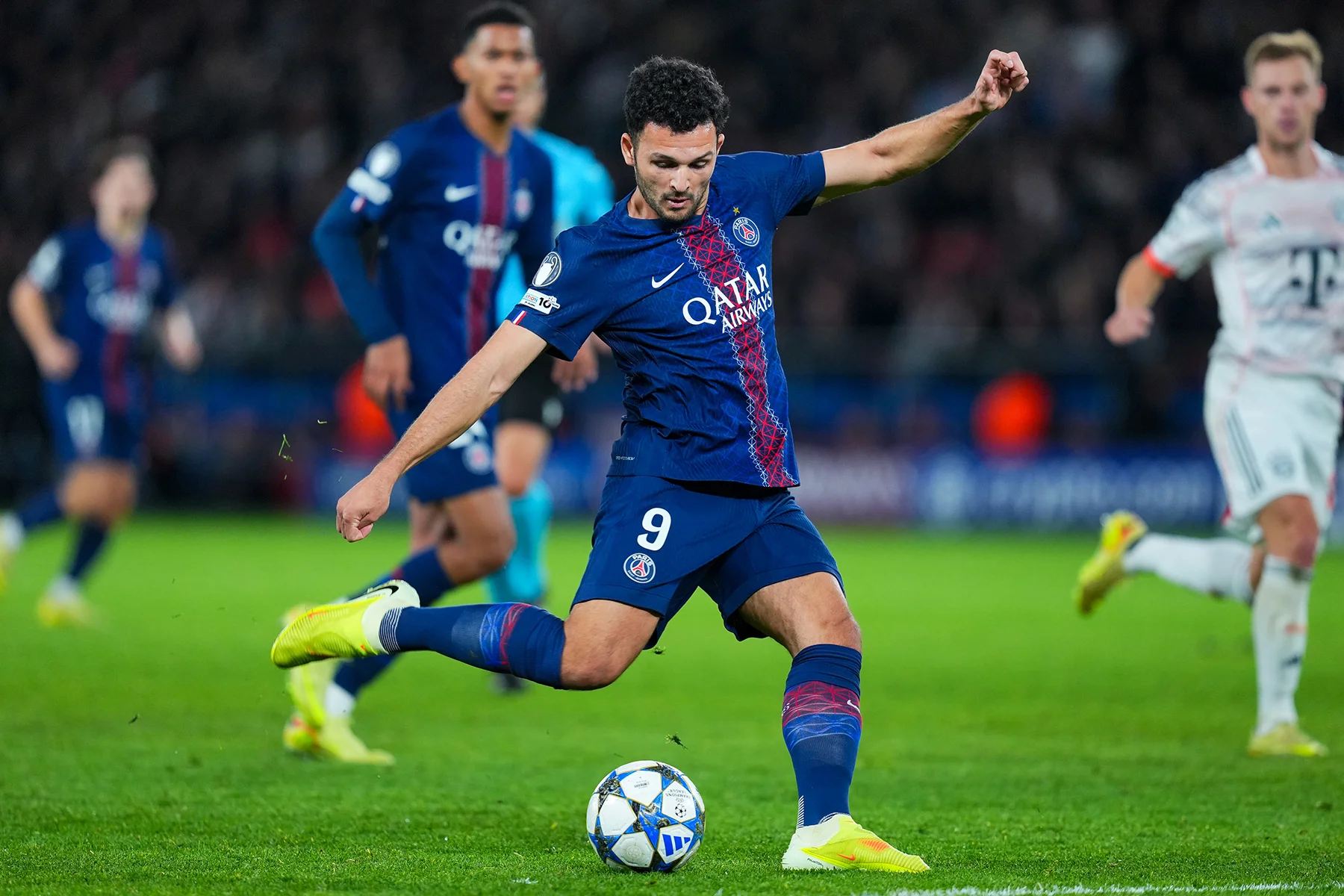
“It was difficult for me to leave PSG because the group was truly fantastic,” Ramos said. He recalled spending much of his time with the club’s three Portuguese players, who knew he was considering a move and teased him about staying for the atmosphere. He said they shared exceptional moments.
That kind of connection can make a transfer emotionally complicated. Footballers don't operate only as individual professionals; they work inside groups that train together, travel together and absorb the pressure of results together. Leaving a supportive dressing room can feel like giving up a part of daily life, even when the sporting case for a move is becoming stronger.
Ramos's comments also push back against the easy assumption that a player who leaves a successful club must have been unhappy with everyone around him. His problem wasn't necessarily PSG's culture or the quality of his teammates. It was the gap between feeling valued within the group and feeling sufficiently trusted on the pitch.
The role on the pitch was harder to accept. “Over the last three years at PSG, I don’t think I’ve ever started four or five consecutive matches,” Ramos said, describing the lack of consistency as frustrating and annoying.
For a striker, a regular starting run can shape almost every part of performance. It gives a player time to build rhythm, understand the movements of nearby attackers and recover from an ordinary match without immediately fearing that his place is gone. Substitute appearances can still produce goals, but they don't provide the same continuity.
That doesn't mean every forward must start every match. Elite squads are built around competition, rotation and changes in tactical approach. The issue is whether rotation feels like a managed plan or a permanent lack of confidence. Ramos's wording indicates that, from his perspective, the pattern became too difficult to accept.
He added that he had scored in four or five consecutive games without starting any of them. The mismatch between his scoring run and his place in the lineup prompted him to discuss his future with his family. His account points to a clear tension: strong ties to the group, but too few consecutive starts to settle into a regular role.
That is the sharpest part of his argument. Goals normally strengthen a forward's claim for more minutes, yet Ramos felt that his own scoring sequence didn't translate into a sustained place in the lineup. Whether that was caused by tactical choices, competition for positions or the manager's preferred selection pattern isn't explained here, and it would be risky to infer more than he has said.
Still, the frustration is understandable. A player can accept being rotated when the arrangement produces a clear path back into the team. If the path never becomes visible, even a productive substitute role may start to feel like a ceiling.
And that's the part most people overlook: a successful team can still be the wrong sporting environment for an individual player. Trophies and strong company matter, but they don't erase the professional cost of spending long stretches outside the starting group.
Why the decision became personal
Ramos's decision to speak with his family shows that the choice wasn't presented as a simple football calculation. He had to weigh the comfort of staying against the possibility of finding a more predictable role elsewhere. That sort of decision is especially difficult when the existing club is functioning well and the player has no obvious personal grievance to point to.
There was also a reputational risk in leaving. Walking away from PSG can be interpreted as rejecting competition, but staying can carry its own danger if a player believes his development is being stalled. A striker's career is judged heavily through goals and appearances, and those two measures don't always rise together when starts are irregular.
Now at AC Milan, Ramos has an opportunity to reset that conversation, although a new club can't guarantee the role he wants. He'll still have to earn trust, fit into a different attacking structure and respond when performances are uneven. The move gives him a fresh setting; it doesn't remove the competitive demands that caused the original frustration.
If you're working in this space, the broader lesson is familiar: squad depth is valuable to a club, but it isn't automatically satisfying for every player inside that squad. Teams see rotation as a strength. Players may see the same rotation as evidence that their position is temporary.
This is more significant than it looks. Ramos isn't describing a dramatic rupture at PSG; he's describing the slow pressure created when a player's output and selection status don't appear to match. Those situations can remain manageable for a while, then become impossible to ignore when a contract decision or transfer opportunity arrives.
More PSG updates
PSG said Khvicha Kvaratskhelia’s surgery was successful, according to the club’s release.
The update adds another layer to the club's current squad picture. An injury to an important attacker can increase attention on the players available to the manager, while also raising questions about how much responsibility the remaining forwards may carry. The source doesn't establish how that situation will affect Ramos's former role, so any direct connection would be speculation.
Manager Luis Enrique has said injuries won’t change PSG’s ambition to compete for every title this season. He has also denied that PSG plan to sign a January replacement for Kvaratskhelia.
Those comments underline the club's public position: injuries are being treated as a challenge to manage rather than a reason to lower expectations or immediately alter the squad. They don't answer the selection concerns Ramos raised, but they do show the different priorities at work. PSG is focused on maintaining its competitive aims, while Ramos has chosen to prioritize a more reliable personal role.
What Ramos’s move says about elite squad building
The case exposes a basic tension in modern football. Clubs want several high-level options in each position because long seasons demand rotation and cover. Players, particularly forwards, often want the repetition that comes with being first choice. Both positions are rational, but they can collide even when the team is winning.
For PSG, the immediate sporting cost of losing Ramos may be measured in depth and flexibility, although the available information doesn't establish how the club has assessed that loss. For Ramos, the benefit will depend on whether AC Milan can give him the consistency he felt was missing. The transfer won't be judged by the warmth of his farewell; it'll be judged by his role and his production over time.
That said, his comments don't amount to a broad criticism of PSG. He praised the group and described meaningful relationships inside the club. The complaint is narrower, and therefore more credible: he wanted more consecutive starts and didn't believe that demand was being met.
The takeaway from Ramos’s account is that squad success and camaraderie weren’t enough to outweigh the frustration of an unpredictable starting role.
A happy dressing room isn't the same thing as a settled career. Ramos's departure makes that plain.