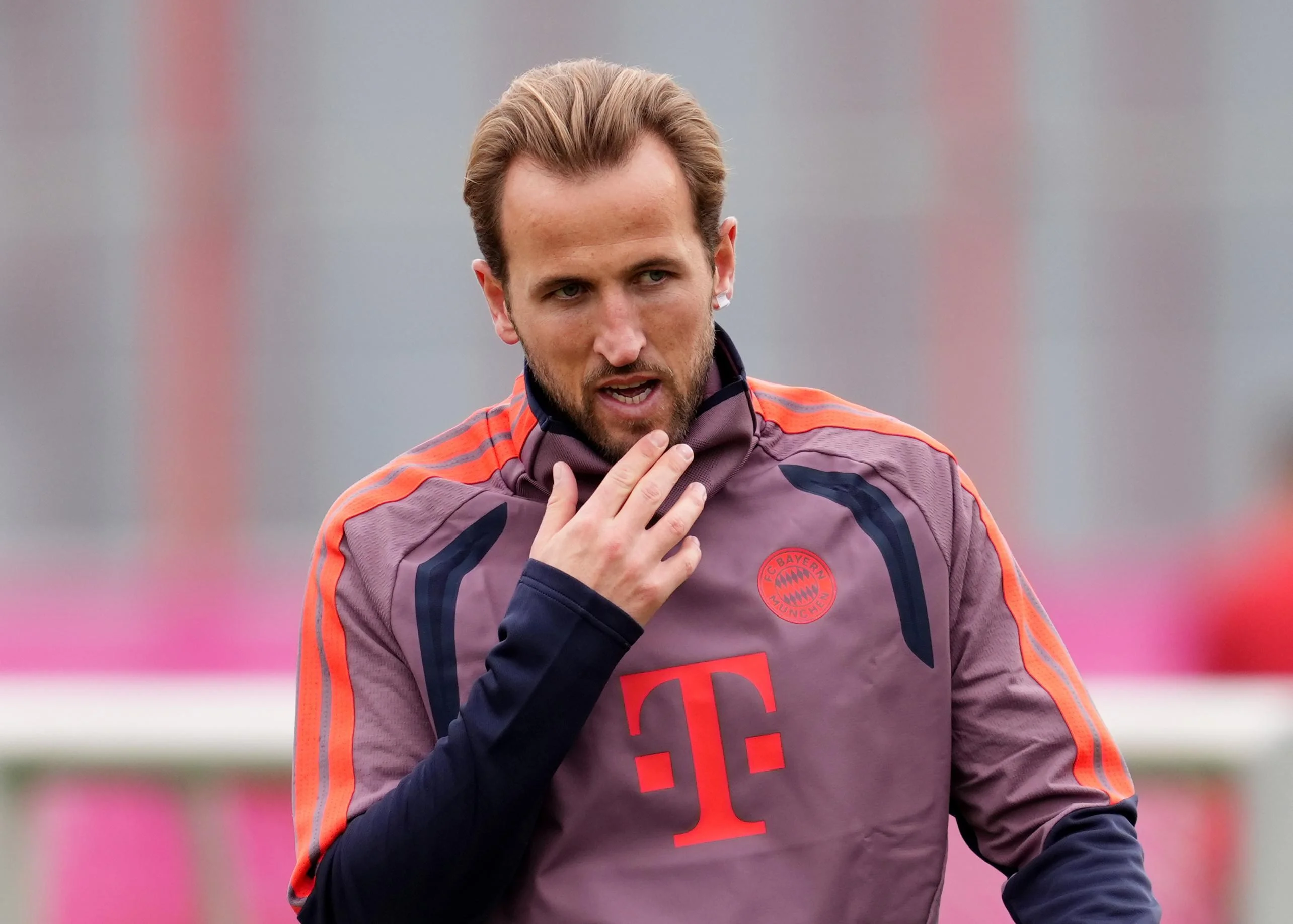
Owen’s view on Kane’s record
Michael Owen thinks injuries kept him from building the scoring record he might have had, but he doubts even a healthier career would have brought him to Harry Kane’s level. That judgment carries weight from a former England striker and 2001 Ballon d’Or winner who knows what it takes to turn chances into goals at the highest level. It also points to a distinction that raw totals can blur: scoring at a high rate is one achievement, while sustaining that output across a long run of matches is another.
Owen played for Liverpool, Real Madrid, Newcastle United and England before recurring injuries curtailed his career. Asked whether better health might have let him match Kane’s achievements for England and Bayern Munich, he said his goal total could have been much higher, perhaps even double. But he drew a firm line between imagining more goals and imagining many more appearances. The latter, he suggested, was never something he could confidently claim.
“I would have done a lot better, goals wise, in my career. You might be able to argue that I might have been able to double my tallies, but I don’t think I would have managed to play in as many games and score as many goals as Harry Kane,” Owen said in comments to Casino.org.
That distinction makes Owen’s comparison more interesting than a simple hypothetical about missed goals. A striker can be prolific when available and still fall short of the cumulative totals built by someone who keeps returning to the team. In this case, Owen isn’t claiming that health alone would have closed the gap. He’s acknowledging that Kane’s record reflects both finishing and the ability to remain a regular presence over time.
Kane’s value to England
Owen’s assessment goes beyond career totals. He praised Kane’s reliability for England, especially his record of delivering in important matches, and described him as a leader as well as a consistent source of goals. That praise speaks to the role a senior striker can play beyond the final touch: setting a standard for the attack, giving teammates a dependable reference point, and carrying responsibility when a match is tight.
“He’s been absolutely incredible for England over the years, and he’ll go down as an all-time great. Big games, big goals, big performances, just a constant source of goals. He’s been a real leader. I can’t speak highly enough of him. He’s a proper guy and a proper player, and we’ve been lucky to have him for England for many years now,” Owen said.
The emphasis on big games is part of the case Owen is making. A scoring record can be counted; influence is harder to reduce to a total. When a striker delivers across important fixtures and remains a reliable option for the team, those performances help explain why a former international would describe him as a leader. Owen’s comments are praise, of course, but they’re also a useful reminder that Kane’s standing rests on more than how often he finds the net.
A broader role at Bayern
Kane joined Bayern Munich from Tottenham Hotspur in 2023. His contribution there includes more than finishing: his movement and chance creation have helped make him a focal point who can also bring teammates into attacks. That broader function matters because a striker who can connect play gives a team another route forward when the direct chance to shoot isn’t available.
For a forward, that work can be less visible than a goal but still shape how an attack develops. Movement can create room for others, while a well-timed pass can turn a promising spell into a clear opportunity. The article’s central point about Kane’s value is therefore twofold: he scores consistently, and his role can help teammates take part in the attack. Those qualities make him more than a finisher in Bayern’s setup.
What the comparison tells us
Owen’s distinction is clear. He can imagine how injuries might have changed his own numbers, but doesn’t claim that a longer career would have produced Kane’s combination of appearances and goals. This is more significant than it looks: the comparison recognizes that elite scoring depends on repeated availability as well as talent, and that a hypothetical tally can’t capture the career a player actually had.
If you’re working in this space, the useful takeaway is that career records need context. Goals show what happened in front of goal; appearances show how often a player was able to contribute. Neither measure tells the whole story on its own (and this is the part most people overlook). The balance between availability, output, and influence is what gives a comparison between two strikers its meaning.
Owen’s comments don’t settle every debate about where Kane ranks, and they weren’t presented as a statistical case. They do offer a peer’s perspective on the demands of sustaining a top-level career. Owen’s own experience gives his view an edge: he knows how injuries can interrupt a striker’s momentum, and he still sees Kane’s combination of games and goals as a standard he might not have reached.
At Bayern, continued production gives Kane the opportunity to add to a reputation already built on sustained scoring and high-pressure performances. The broader question is whether he can keep combining goals with the work that brings teammates into attacks. For now, Owen’s comparison puts the focus on endurance as much as finishing. A long career, counted match by match.
Join the conversation!
Sign up for a user account and get:
- New, improved notifications system!
- Fewer ads
- Create community posts
- Comment on articles, community posts
- Rec comments, community posts