Bayern’s 6-1 win over Leipzig looks less like a string of unrelated defensive errors than a single tactical problem repeated in different forms. Leipzig couldn’t pressure the ball consistently, lost track of runners through central areas and failed to coordinate their back line with the players ahead of it. Bayern kept finding the same openings, then made them count.
The scoreline was emphatic, but the pattern behind it is more revealing. Five of Bayern’s six goals grew from Leipzig’s inability to disrupt the buildup or protect the space behind their defenders. Luis Díaz found himself isolated against a defender three times, while Harry Kane repeatedly moved into blind spots. Individual errors mattered, but the structure kept creating the conditions for them.
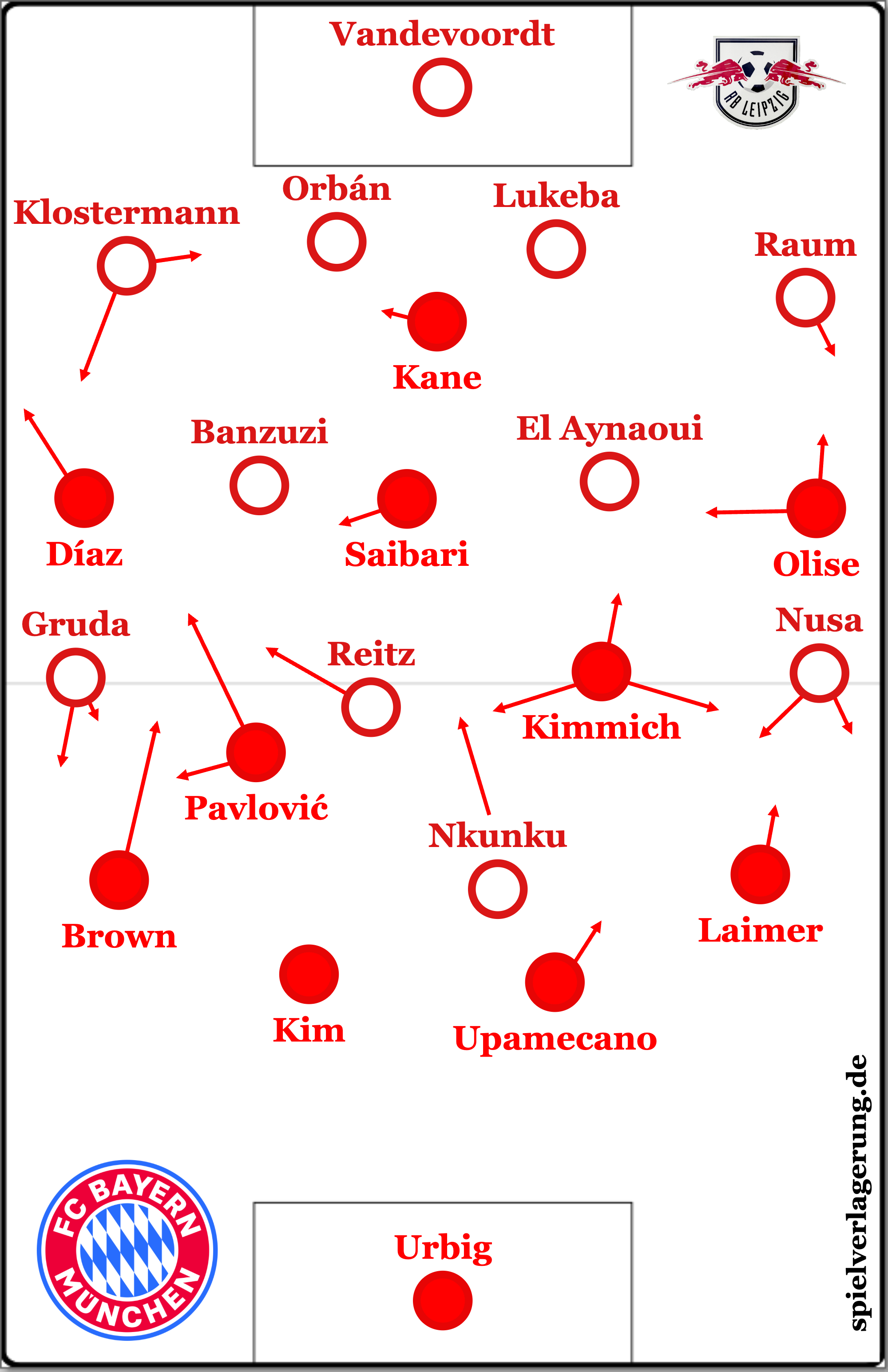
Bayern controlled the routes out of Leipzig’s press
Bayern pressed high and tightly, steering Leipzig goalkeeper Vandevoordt away from the left side and toward long passes. Nusa and Brajan Gruda angled their runs toward Nathaniel Brown and Konrad Laimer, while Joshua Kimmich usually dropped into midfield to give Bayern an extra central option.
That positioning left Leipzig with little room to play short. A pass to the right would have given Kimmich a chance to press toward Raum; instead, he often stayed central and closed the route from there. Leipzig’s long balls brought almost no recoveries, so the forced direct play failed to provide either breathing space or territory.
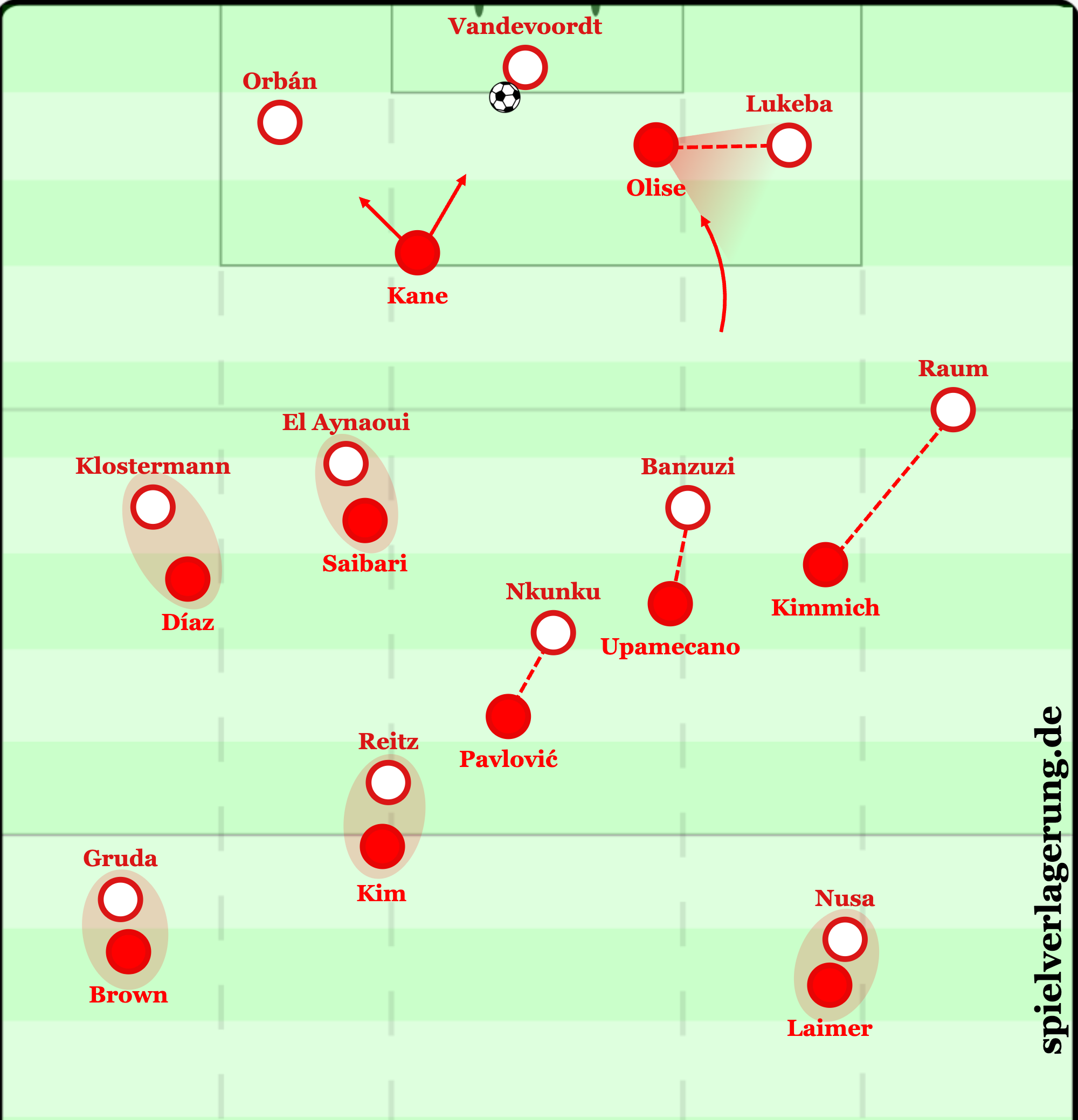
When Leipzig tried to press Bayern in possession, the shifting shape caused a different problem. Kimmich moved to the right, Pavlović dropped on the left to form a back three, and Upamecano held a wide position. Leipzig’s midfielders had to reset their assignments with each rotation. The player expected to step forward first often had to decide whom to track, and those handovers repeatedly broke down.
Bayern then used the space created by Leipzig’s narrow pressing shape. Olise moved into the number 10 area, Brown advanced through the half-space, and Luis Díaz held the left touchline. Saibari and Kane occupied central defenders, then moved away from the central lane. Once Leipzig committed toward the ball, Bayern switched play to the open side and created one-on-ones.
The goals trace the same breakdowns
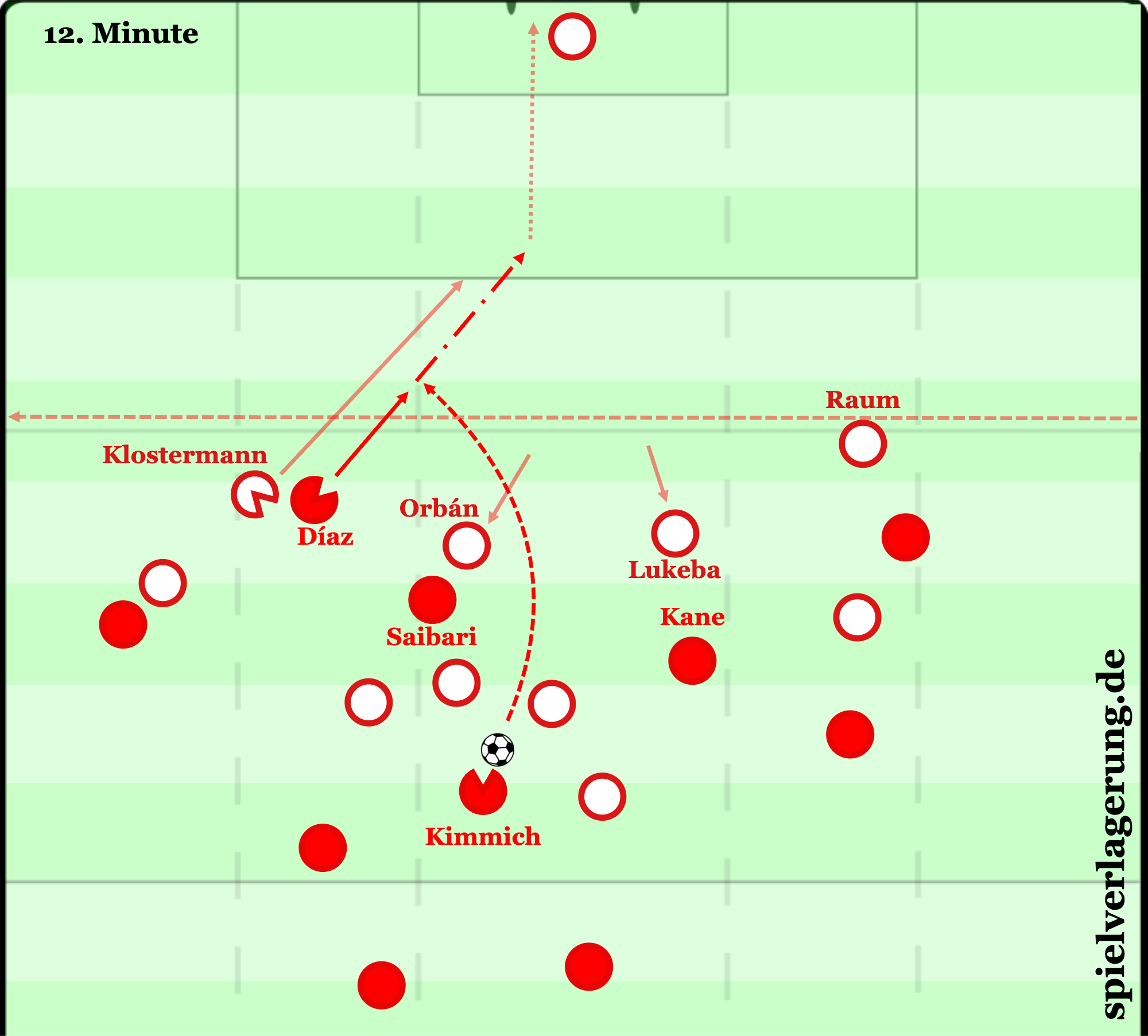
1-0, Luis Díaz (12.) — The opener brought several of Leipzig’s problems together. Kimmich received centrally without pressure and turned with time to pick his pass. Saibari and Kane drew Orban and Lukeba out of the central area, but Leipzig’s full-backs stayed deep rather than pushing up with them. Raum’s position kept Díaz onside, while Klostermann held wide and left the inside channel exposed. Díaz ran through that gap, and Kimmich chipped the ball behind the defense. The goal came from several defenders moving on different cues, not one isolated mistake.
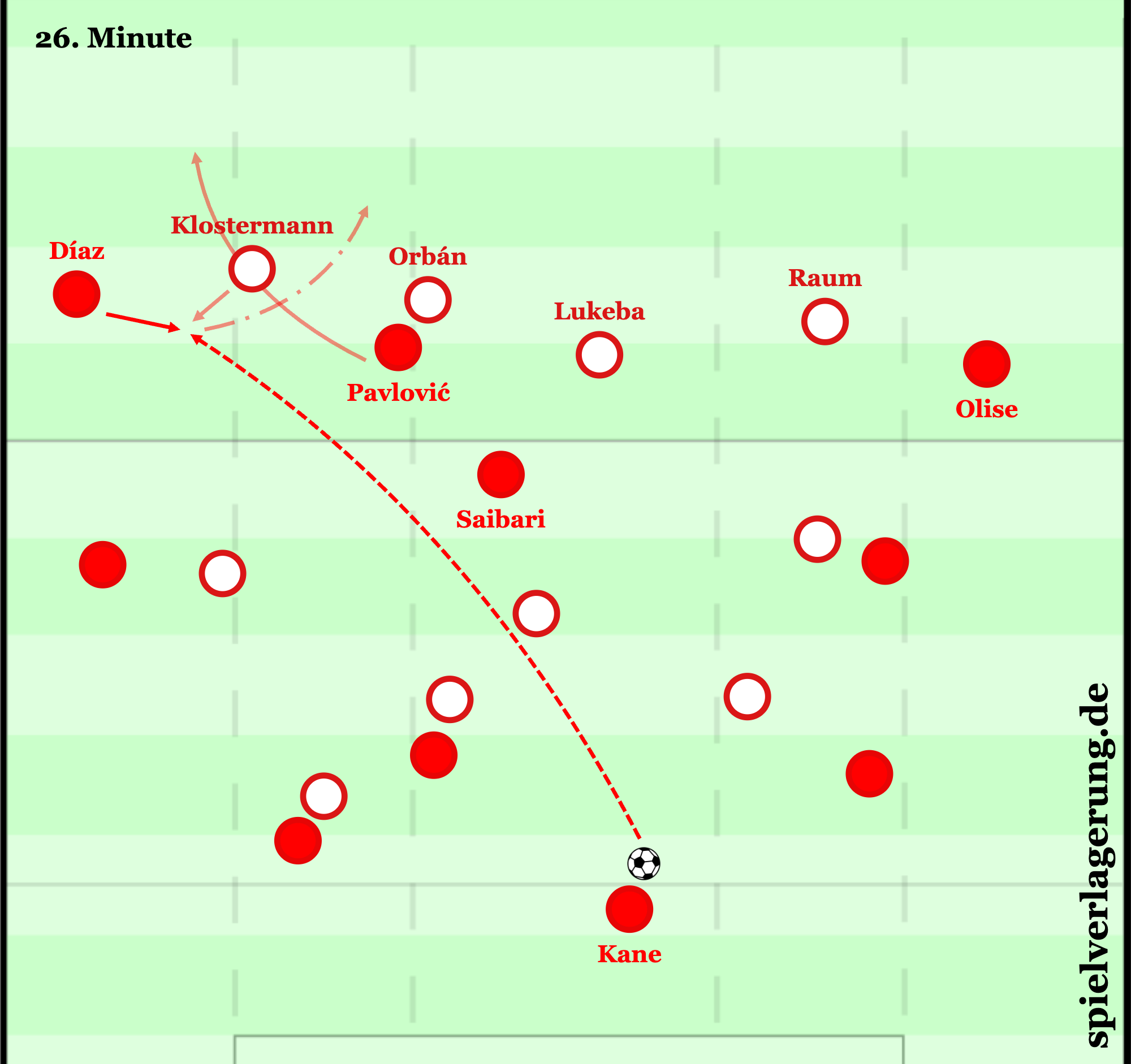
2-0, Aleksandar Pavlović (26.) — Kane dropped deep, and Leipzig didn’t shift across together. He received with room to turn and sent a long pass through the space in front of Leipzig’s back line. Díaz moved into its path and reached the ball before Klostermann could get across. After beating him, Díaz drove centrally at Orban, forcing Leipzig’s defenders to focus on the ball and opening the lane for Pavlović. The midfielder had held a high position on the left and overlapped into space. He needed two touches to finish with his left foot.
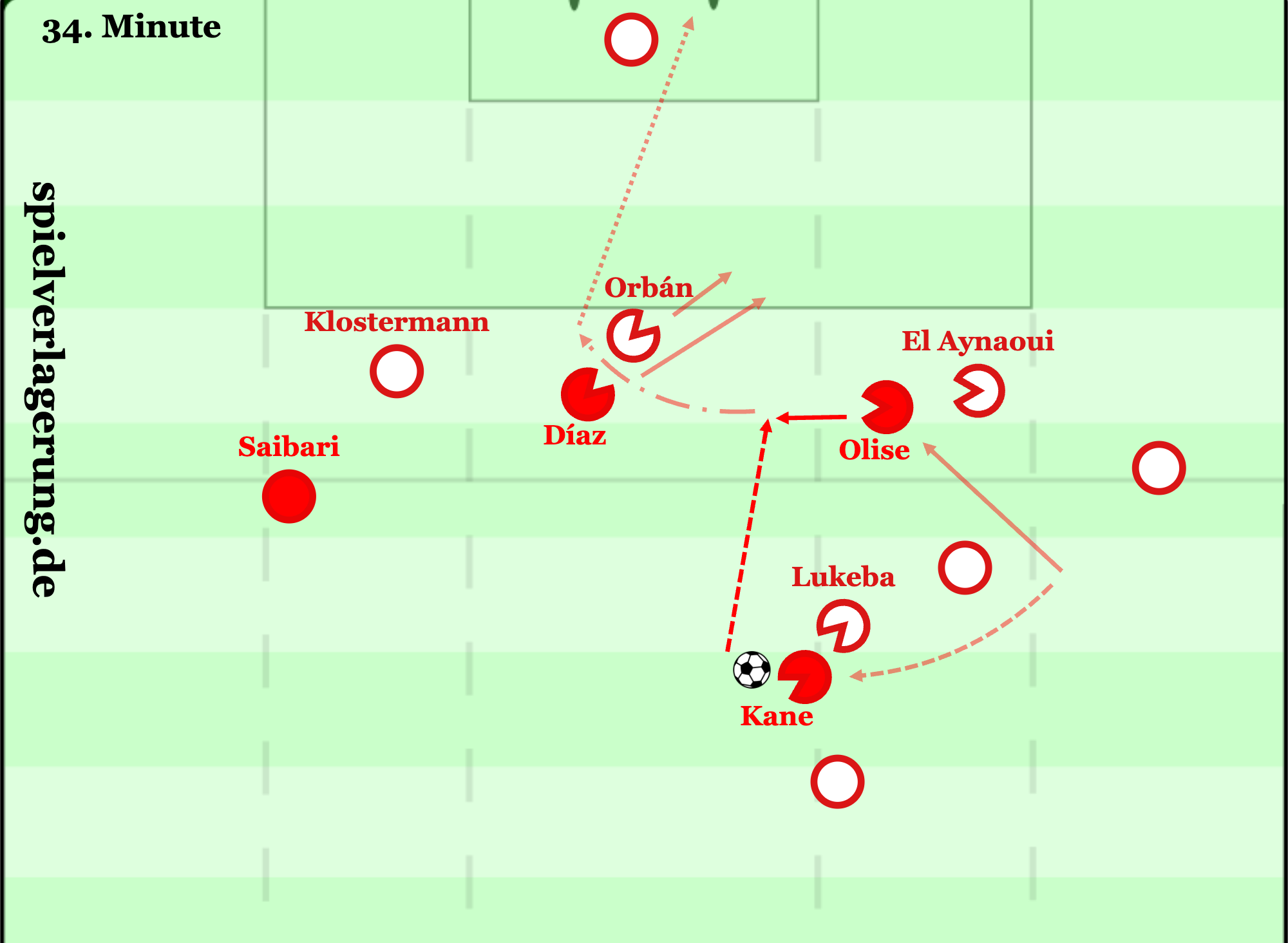
3-0, Michael Olise (34.) — A Leipzig throw-in showed how effectively Bayern’s press could close off options. Bayern tracked opponents and handed players over cleanly; Raum’s misplaced pass then left Leipzig scrambling. Kane opened his body to receive, while Olise cut inside from the wing. Banzuzi and his midfield partner didn’t pick up Olise’s run, giving him time to play the decisive pass. Díaz ran beyond and took Orban with him; Saibari pinned Klostermann wide. Olise finished across Vandevoordt, sending the goalkeeper the wrong way.
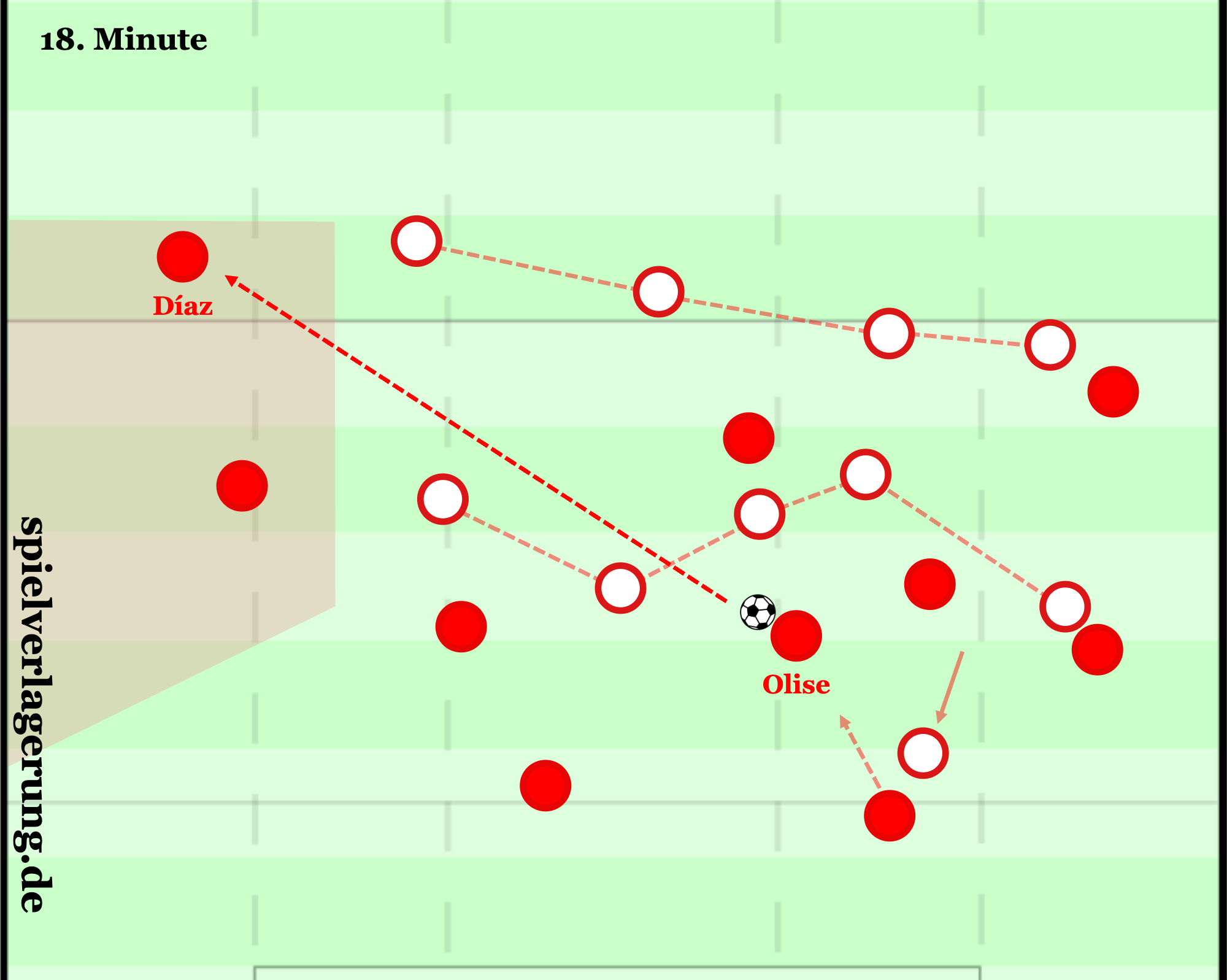
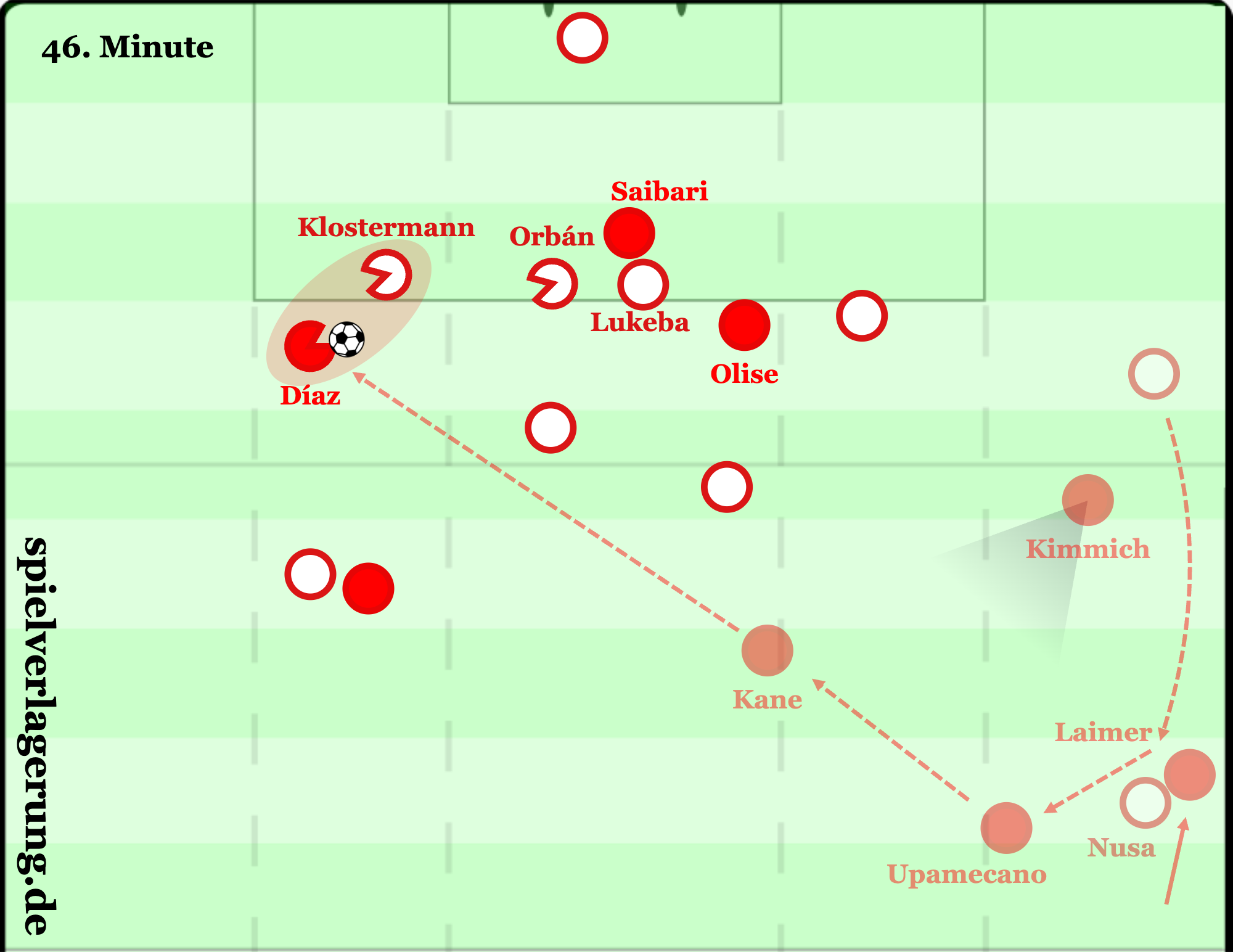
4-0, Luis Díaz (47.) — Bayern won the ball and switched quickly to the far side. A diagonal pass put Díaz one-on-one with a defender again. He carried the ball while Leipzig failed to close the central route, Orban arrived late to challenge and Klostermann couldn’t get into the duel. Vandevoordt left the far corner open. By then, Leipzig’s defensive shape had again allowed the isolated matchup Bayern wanted.
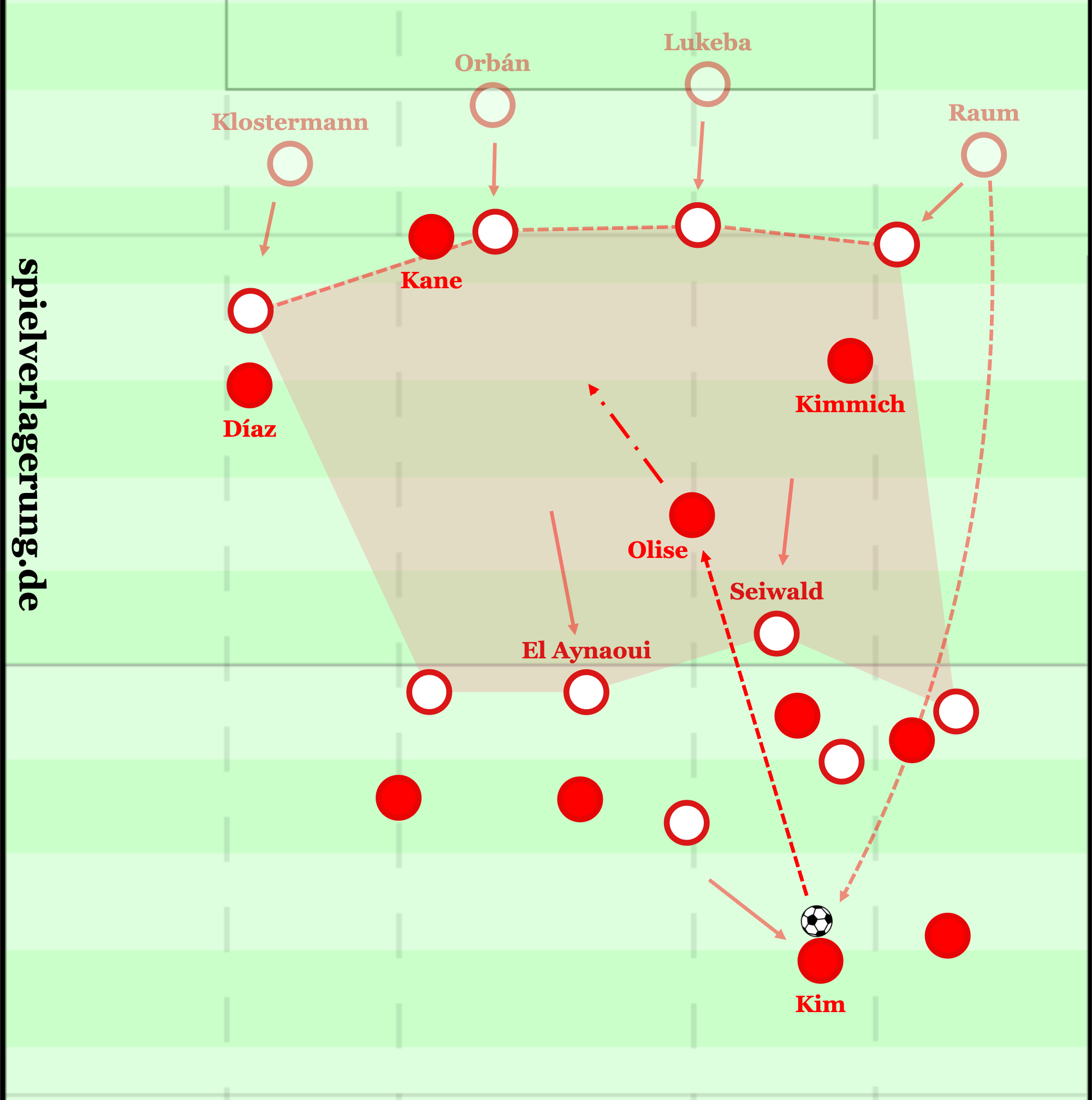
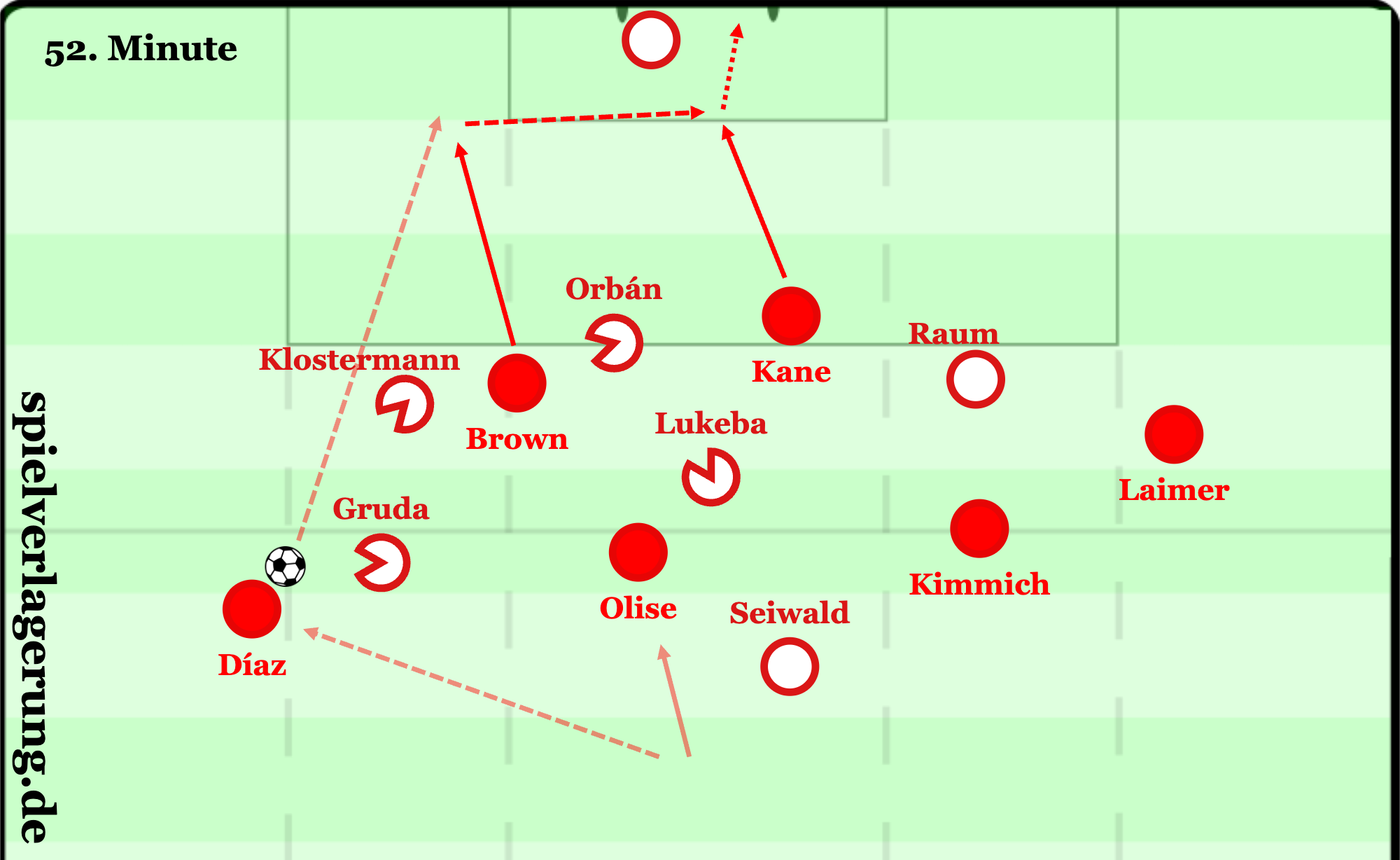
5-0, Harry Kane (53.) — This goal exposed the gap between Leipzig’s lines. After sending a long ball forward, Leipzig’s defenders stayed back while the midfield and forwards pressed ahead. That left a large pocket in front of the defense, where Olise could receive Kim’s pass and run forward. One pass removed six Leipzig players from the play. Olise laid the ball off to Díaz, Brown joined to create a two-on-one, and Klostermann didn’t track Brown’s run from the half-space. Kane then slipped into Orban’s blind side, creating a two-on-one against the goalkeeper.
6-0, Luis Díaz (69.) — Bayern created a five-against-four on the wing from a set piece. Gnabry held Leipzig’s defenders in place, leaving room for Díaz. Orban stepped out but didn’t reach the ball, and Díaz faced another one-on-one. The move echoed his fourth goal despite starting from a different phase of play, reinforcing the pattern.
6-1, Andrija Maksimović (90.+1) — Leipzig’s late goal showed what their attack had lacked earlier: a coordinated central combination. Bayern had dropped into a deeper block. Gruda beat Brown wide, and Upamecano stepped across, but left too much space between himself and the center. That gap allowed Leipzig to play a quick one-two. The defense narrowed around the exchange, leaving Maksimović free behind it to take two touches with his left foot and score.
Why the scoreline points beyond individual errors
Leipzig’s recurring issue was a press that stayed narrow without finding a reliable trigger against Bayern’s rotating back three. Bayern used that compactness to switch the ball, then attacked the space left open on the far side. The resulting one-on-ones repeatedly favored Bayern.
Klostermann had a difficult match, but pinning the defeat on him would miss the wider failure. In the key moments, Leipzig’s protection in front of the defense had already broken down. Orban stepped out too late on multiple occasions, Kane found blind-side positions, and Díaz had three chances to attack a defender alone.
My read is that the 6-1 matters less as a collection of seven scoreline changes than as evidence of how often Bayern could recreate the same conditions. Leipzig’s pressing assignments, midfield distances and defensive line didn’t work together. Until they do, opponents who can rotate their buildup and switch quickly will keep finding the open side.
LC is often found in a classroom, happiest on a football pitch, and occasionally on LinkedIn.